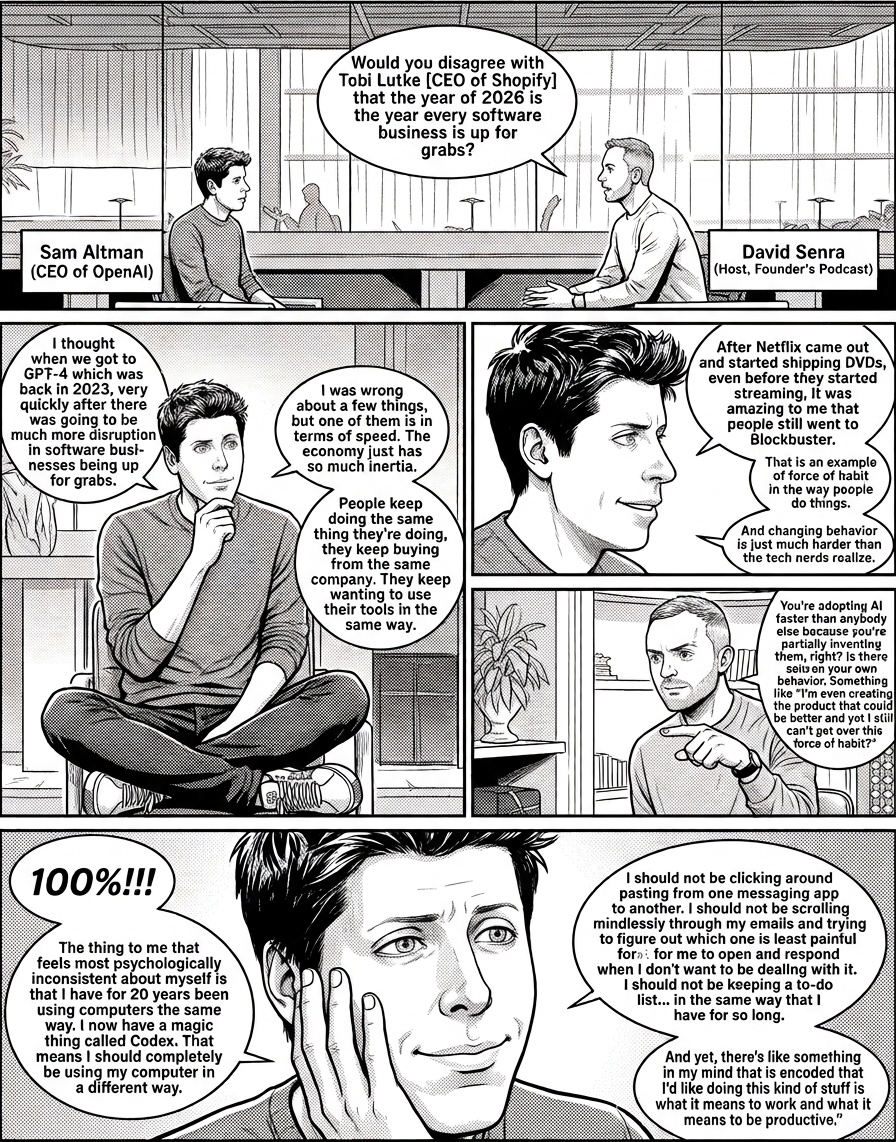
Founders are professional optimists. It's nearly a job requirement — you don't walk away from a stable path to build something from nothing unless you believe the world will change faster than it actually will. But that same optimism becomes a liability the moment it shapes your adoption forecast.
Sam Altman reminds us about the force that founders consistently underestimate: the Force of Habit, also known as Market Inertia. It isn't that people reject better products. It's that people are creatures of habit, embedded in workflows, tools, and routines that took years to form. Even when a new technology is objectively superior, the switch doesn't happen on the founder's timeline — it happens on the market's timeline.
Every founder building a new product implicitly assumes that being better is enough. Altman's reminder is that "better" has to clear a much higher bar than founders expect, because it's competing against something with real gravity:
None of this means the market won't move. It means it moves slower, and more reluctantly, than the founder's own excitement would suggest.
Factoring in market inertia doesn't mean lowering your ambition — it means being honest about your timeline. The best founders plan for the gap between "this product is better" and "the market has changed its habits," and they build the patience, distribution, and wedge strategy needed to close it.